Zygoma Implants for Severe Jawbone Loss: Benefits and Treatment Options
Losing teeth can affect much more than your smile. Over time, missing teeth can lead to significant bone loss in the upper jaw, making traditional dental implant placement difficult or, in some cases, impossible. For patients with severe upper jawbone loss, Zygoma Implants can provide an advanced alternative to conventional implants and extensive bone-grafting procedures.
At Alpha Aesthetics Clinics, we understand that every patient has different dental and anatomical needs. Zygoma implant treatment may be considered for carefully selected patients who have severe bone deficiency in the upper jaw and need a stable foundation for a fixed replacement of missing teeth.
What Are Zygoma Implants?
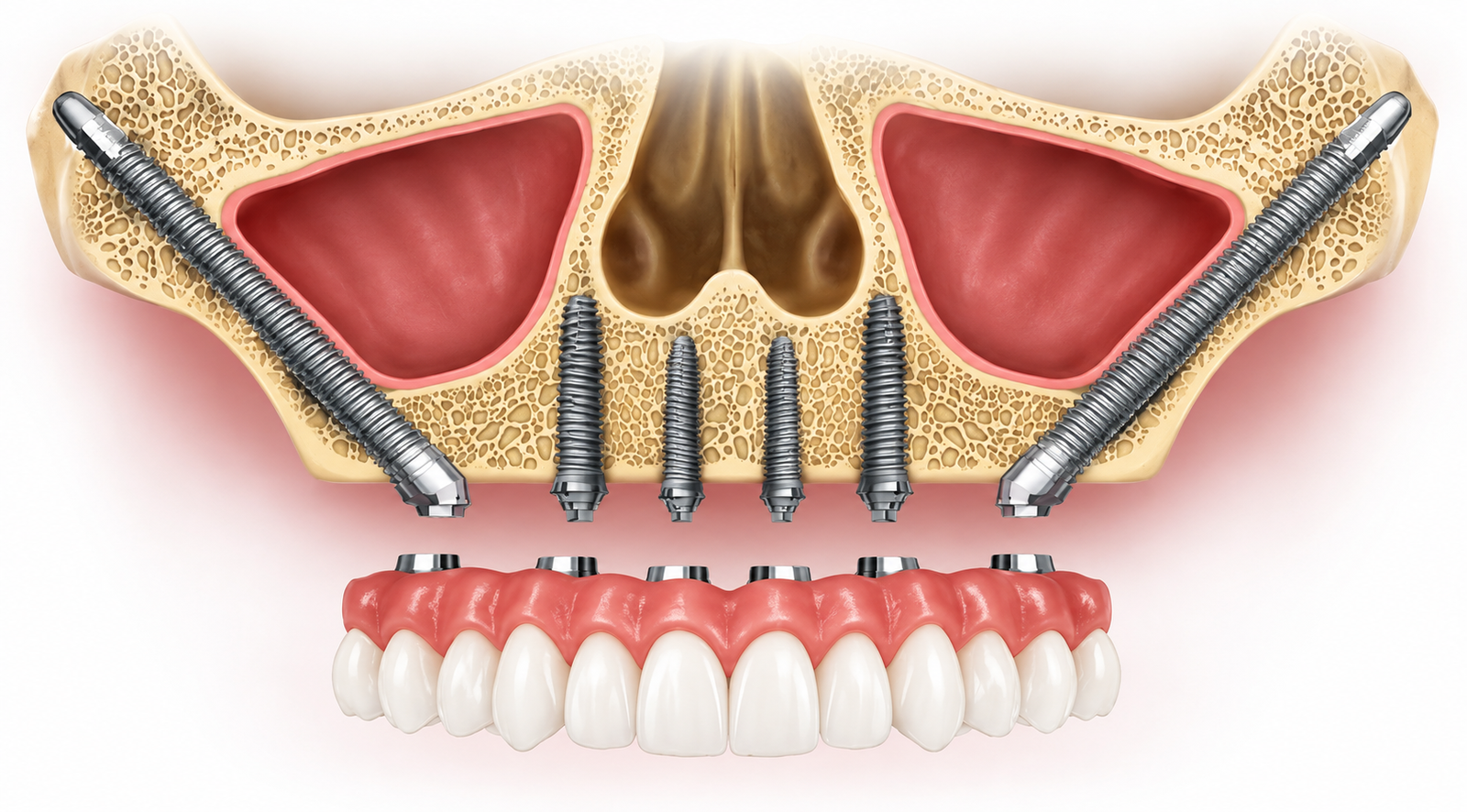
Zygoma Implants, also known as zygomatic implants, are longer dental implants designed specifically for patients with severe bone loss in the upper jaw. Unlike conventional dental implants, which are generally anchored in the jawbone, zygomatic implants are placed into the stronger zygomatic bone, commonly known as the cheekbone.
The zygomatic bone can provide the necessary support when there is insufficient bone in the upper jaw for conventional implants.
Research has identified severe maxillary bone atrophy as one of the main indications for zygomatic implants.
This approach can sometimes avoid the need for extensive bone augmentation, making it an important treatment option for appropriately selected patients.
Why Does Severe Jawbone Loss Occur?
Bone loss in the upper jaw can happen for several reasons, including:
- Long-term missing teeth
- Advanced gum disease
- Natural bone resorption after tooth loss
- Previous failed dental implants
- Trauma or injury
- Certain surgical procedures
- Long-term use of removable dentures
- Developmental or anatomical limitations
When teeth are missing for a long period, the jawbone can gradually shrink because it no longer receives the stimulation normally provided by tooth roots. In severe cases, there may not be enough bone volume to securely place conventional dental implants.
Who May Need Zygoma Implants?
Zygoma implants are generally considered for patients with severe upper jawbone loss where conventional implant treatment is not predictable without significant bone reconstruction.
You may be considered for this treatment if you:
- Have extensive bone loss in the upper jaw
- Have insufficient bone for conventional implants
- Have experienced significant jawbone resorption after tooth loss
- Have previously undergone unsuccessful grafting procedures
- Want to explore alternatives to extensive bone-grafting treatment
- Need full-arch rehabilitation of the upper jaw
However, not every patient with bone loss requires zygomatic implants. Modern implant dentistry also includes alternatives such as short implants, tilted implants, bone regeneration procedures, and other customized solutions. The most appropriate option depends on your remaining bone, anatomy, overall health, and treatment goals.
Benefits of Zygoma Implants
1. Treatment for Severe Bone Loss
One of the major advantages of Zygoma Implants is that they can provide an anchorage option when there is very little usable bone in the upper jaw.
By using the stronger zygomatic bone for support, the treatment can overcome some of the limitations associated with severely resorbed maxillary bone.
2. May Reduce the Need for Bone Grafting
Traditional treatment for severe upper jawbone loss may involve procedures such as bone grafting or sinus augmentation before conventional implants can be placed.
In appropriately selected cases, zygomatic implants can reduce or eliminate the need for these extensive augmentation procedures.
This may help reduce the overall number of surgical stages and shorten the pathway to fixed teeth.
3. Potentially Shorter Treatment Timeline
Because extensive bone reconstruction may not be required in suitable cases, zygomatic implant treatment can potentially reduce treatment time.
Some treatment protocols allow an immediate provisional fixed prosthesis, sometimes within 24 hours, depending on the patient’s clinical situation and the treatment plan.
It is important to understand that immediate teeth are not guaranteed for every patient. The decision depends on factors such as implant stability, surgical findings, prosthetic planning, and overall oral health.
4. Fixed Teeth Instead of Removable Dentures
For patients who have struggled with loose or uncomfortable dentures, implant-supported fixed teeth can offer a different rehabilitation approach.
Zygomatic implants can be used as part of a full-arch implant-supported restoration, providing a stable foundation for replacement teeth.
5. Improved Chewing and Quality of Life
Severe tooth loss can make eating, speaking, and socializing difficult. Studies evaluating patient-reported outcomes have found improvements in oral health-related quality of life and satisfaction following rehabilitation with zygomatic implant-supported prostheses.
Zygoma Implants vs. Traditional Dental Implants
The primary difference is where the implants obtain their support.
Traditional dental implants are generally placed into the available jawbone at the site of missing teeth. If there is insufficient bone, additional procedures may be required before implant placement.
Zygoma Implants are longer and designed to obtain support from the zygomatic bone when the upper jaw has severe bone deficiency.
The choice between conventional implants, grafting, zygomatic implants, or another approach should always be based on detailed clinical and radiographic evaluation.
Treatment Options for Severe Upper Jawbone Loss
Zygoma implants are not the only possible solution. Depending on the amount and location of available bone, treatment may include:
Conventional Dental Implants
If enough healthy bone remains, conventional implants may still be the most appropriate option. In some patients with moderate bone loss, implant placement may be possible with carefully planned techniques.
Bone Grafting
Bone grafting may be recommended when additional bone volume is needed for conventional implant placement. Depending on the situation, different grafting techniques and materials may be considered.
Sinus Augmentation
When bone height in the back portion of the upper jaw is limited, sinus augmentation may be considered to create additional space for conventional implants.
Short or Tilted Implants
In selected patients, shorter or strategically angled conventional implants may provide an alternative to more extensive procedures.
Zygoma Implants
For patients with severe maxillary atrophy, zygomatic implants may provide an alternative foundation for full-arch rehabilitation. Evidence reviews report high implant survival rates, although complications can occur and careful patient selection and experienced surgical management are important.
How Is Zygoma Implant Treatment Planned?
Successful treatment begins with detailed diagnosis and planning.
At Alpha Aesthetics Clinics, the assessment may include:
- Clinical examination – Your teeth, gums, bite, facial structure, and overall oral condition are evaluated.
- 3D imaging – Advanced imaging such as CBCT can help assess the available bone and important anatomical structures.
- Treatment planning – The implant position, number of implants, and final teeth are planned according to your anatomy and restorative requirements.
- Surgical placement – The zygomatic implants are carefully positioned to obtain stable support from the zygomatic bone.
- Prosthetic rehabilitation – Once appropriate stability is achieved, the implants can be connected to a carefully designed fixed dental prosthesis according to the treatment protocol.
- Follow-up and maintenance – Regular follow-up is important for monitoring the implants, gums, prosthesis, and overall oral health.
Are Zygoma Implants Safe?
Zygoma implants have been studied extensively and have demonstrated high reported survival rates in appropriately selected patients. One systematic review reported cumulative implant success rates of approximately 98.5% during the first year and 96.1% after more than five years.
However, zygomatic implant surgery is more complex than routine dental implant placement. Potential complications can include sinus-related problems, soft-tissue complications, prosthetic complications, infection, and other surgical complications. Sinusitis has been reported among the more frequently observed biological complications.
For this reason, careful diagnosis, detailed planning, appropriate case selection, and treatment by clinicians with relevant experience are essential.
What Should You Expect After Treatment?
Some swelling, discomfort, or bruising can occur following surgery. Your dental team will provide specific instructions regarding medication, oral hygiene, diet, and follow-up appointments.
The final rehabilitation process depends on your individual treatment plan. Some patients may receive a provisional fixed prosthesis soon after surgery, while others may require a different loading or healing protocol.
Regular maintenance is essential after receiving implant-supported teeth. Good oral hygiene and scheduled professional reviews can help protect the implants and prosthesis over the long term.
Why Choose Alpha Aesthetics Clinics for Zygoma Implant Treatment?
At Alpha Aesthetics Clinics, our approach begins with understanding your individual dental condition rather than recommending a single treatment for everyone.
Patients with severe bone loss may have several possible treatment pathways. Our goal is to evaluate your bone availability, oral health, functional requirements, aesthetic expectations, and long-term goals before determining whether Zygoma Implants or another implant solution is appropriate.
A detailed examination and 3D imaging can help create a personalized treatment plan and explain the available options clearly.
Take the Next Step Toward a Stable Smile
Severe upper jawbone loss does not necessarily mean that fixed implant-supported teeth are impossible. Zygoma Implants can provide an advanced treatment option for selected patients who do not have enough bone for conventional dental implants.
At Alpha Aesthetics Clinics, we believe treatment should be based on careful diagnosis, advanced planning, and your individual needs. If you have been told that you do not have enough bone for traditional implants, a professional evaluation can help determine whether zygomatic implants, bone grafting, conventional implants, or another solution may be right for you.
Book a consultation with Alpha Aesthetics Clinics to discuss your options for restoring function, confidence, and a natural-looking smile.
Book Your Consultation Today
If you’re considering fillers vs thread lift treatment in Lucknow, the best way to decide is through a personalized consultation. Visit Alpha Aesthetics Clinics to get expert advice and choose the treatment that truly suits your skin.
Here’s how you can connect with us:
- Contact Us – Speak directly with our friendly skincare experts and get personalized guidance for your concerns.
- About Us –Learn more about our patient-focused approach and commitment to safe, effective, and natural-looking aesthetic treatments.
- Visit Our Website – Explore our full range of advanced skin and aesthetic services and easily book your consultation online.