How Effective Is Laser Treatment for Skin Pigmentation Removal?
Struggling with dark spots, uneven skin tone, or stubborn pigmentation is more common than you might think. Many people find themselves relying on concealer, avoiding certain outfits, or endlessly searching for effective solutions online. Despite being one of the most frequent concerns discussed with dermatologists and aesthetic clinics, pigmentation is still widely misunderstood—often leading to confusion about the right treatment and care.
Somewhere along the way, you’ve probably heard that laser treatment for skin pigmentation can fade dark spots for good. But does it actually work, is it safe for every skin type, and what should you realistically expect once the redness fades and the glow shows up?
What Causes Skin Pigmentation in the First Place?
Before diving into treatment, it helps to understand what you’re actually treating. Pigmentation issues happen when your skin produces excess melanin, the pigment responsible for skin color. This can show up as:
- Sunspots or age spots — caused by years of UV exposure
- Melasma — hormonally triggered patches, often on the cheeks, forehead, or upper lip
- Post-inflammatory hyperpigmentation (PIH) — dark marks left behind after acne, injury, or inflammation
- Freckles — genetic, sun-triggered pigmentation
Each of these behaves a little differently under laser energy, which is exactly why a proper diagnosis matters before jumping into treatment. Melasma, for instance, can actually worsen with the wrong type of laser, while sunspots and PIH usually respond very well.
How Does Laser Treatment for Pigmentation Actually Work?
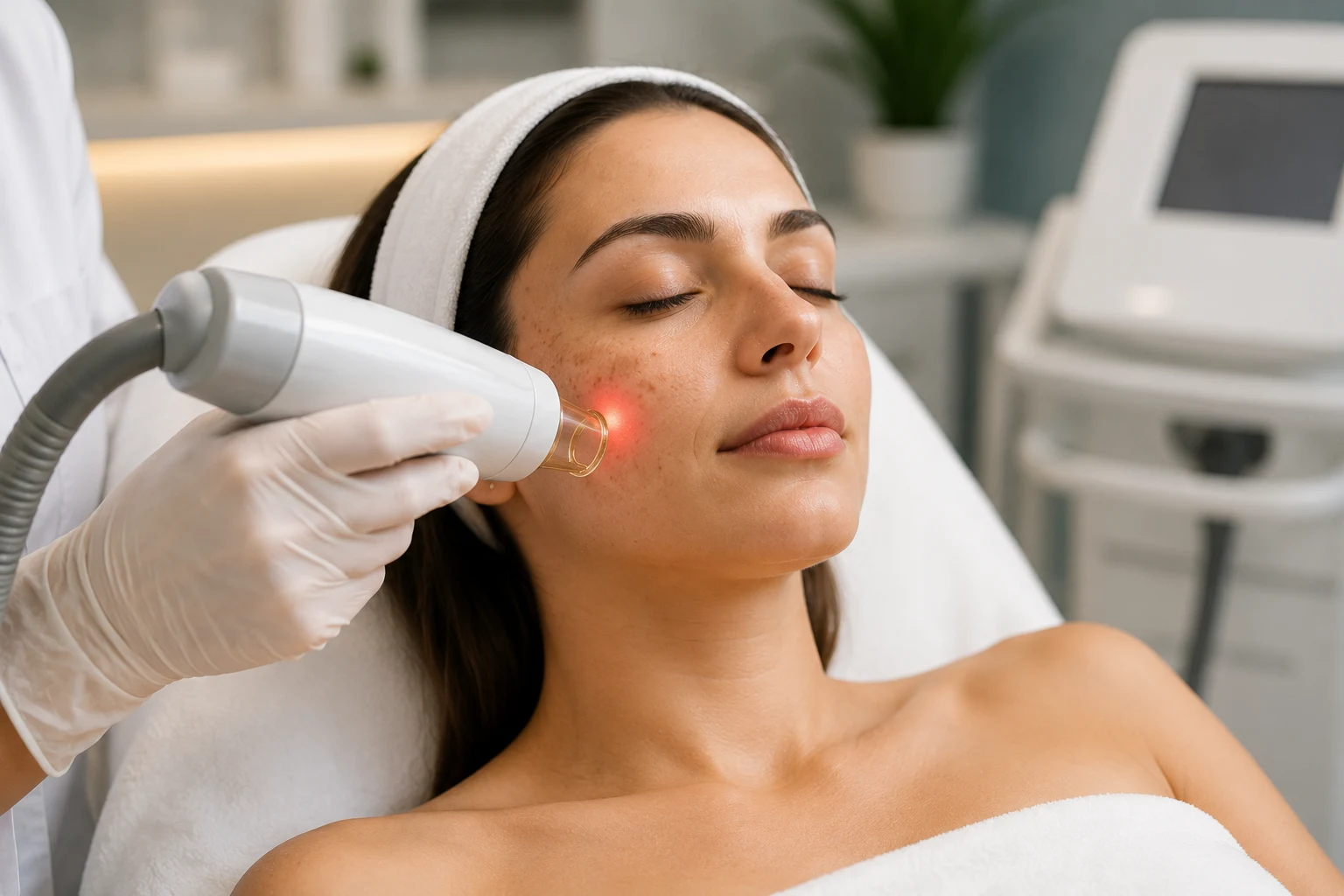
At its core, laser treatment for pigmentation uses focused light energy to target melanin in the skin. The excess pigment absorbs the light, heats up, and breaks into tiny fragments. Your body’s immune system then naturally clears these fragments over the following days and weeks, gradually revealing more even-toned skin.
Clinics typically use one of a few laser technologies, depending on the type and depth of pigmentation:
Q-Switched Lasers
These deliver extremely short, high-energy pulses that shatter pigment particles without significantly heating the surrounding skin. They’re a go-to option for sunspots, freckles, and certain types of birthmarks.
Pico Lasers
A more advanced evolution of Q-switched technology, pico lasers deliver energy in picoseconds (trillionths of a second). This ultra-short pulse duration means less heat damage to surrounding tissue, which generally translates to less downtime and lower risk for darker skin tones.
Fractional Lasers
Rather than treating the entire surface, fractional lasers create thousands of microscopic treatment zones, leaving surrounding skin intact to speed up healing. These are often used for pigmentation combined with texture issues, like acne scarring.
IPL (Intense Pulsed Light)
Technically not a true laser, IPL uses broad-spectrum light and is popular for sun damage and redness, though it tends to be less precise than dedicated pigmentation lasers.
Are You a Good Candidate for Pigmentation Laser Treatment?
Not everyone with dark spots is an ideal candidate right away, and a good clinic will tell you this upfront rather than booking you in regardless.
You’re likely a good fit if you have:
- Sunspots, freckles, or age spots that have been stable (not spreading or changing shape)
- Sunspots, freckles, or age spots that have been stable (not spreading or changing shape)
- Realistic expectations about needing multiple sessions
- No active skin infections, open wounds, or recent intense sun exposure/tanning in the treatment area
You may need to wait or choose a different approach if you have:
- Active melasma that’s currently flaring — some lasers can worsen melasma if used at the wrong stage or settings
- A recent tan or ongoing sun exposure without protection
- Active acne, eczema, or a skin infection in the treatment area
- Used isotretinoin (Accutane) in the last 6 months
- A history of keloid scarring, which needs extra caution with any energy-based device
- Are pregnant — most clinics postpone elective laser treatments until after pregnancy and breastfeeding
This is exactly why a proper consultation, not a walk-in laser session, is step one. A qualified provider will check your Fitzpatrick skin type, pigmentation history, and current medications before recommending a treatment plan.
How Effective Is It, Really?
This is the question most people actually want answered. In general, laser treatment for pigmentation is considered one of the more effective options available, especially compared to topical creams alone. Most patients see visible lightening of sunspots and freckles within 1–3 sessions, with results continuing to improve over the following weeks as the body clears pigment debris.
However, effectiveness depends heavily on a few factors:
- Type of pigmentation — Sunspots and freckles typically respond faster and more predictably than melasma, which often requires a more conservative, combination approach.
- Skin tone — Lasers must be carefully calibrated for darker skin types to avoid triggering more pigmentation (a risk called post-inflammatory hyperpigmentation).
- Consistency of aftercare — Skipping sunscreen after treatment is one of the most common reasons results don’t hold.
- Number of sessions — Most pigmentation concerns need a series of 3–6 sessions spaced several weeks apart, not a single visit.
It’s also worth setting realistic expectations: lasers can dramatically fade existing pigmentation, but they don’t prevent new pigmentation from forming if sun exposure and other triggers aren’t managed afterward.
What Results Look Like: A Realistic Timeline
One thing most people underestimate is how gradual this process is. Here’s roughly what to expect if you go in for a course of pigmentation laser treatment:
- Immediately after (Day 0): Treated spots often look darker and more obvious, not lighter. This is normal — the pigment is rising to the skin’s surface.
- Days 1–7: Redness fades, and spots may flake, scab lightly, or peel off. Avoid picking at this stage.
- Weeks 2–4: Skin tone starts looking noticeably more even as the body clears fragmented pigment. Many patients see their first real “before and after” difference here.
- Session 2–3 (around week 6–12): Deeper or more stubborn pigmentation starts responding; melasma in particular tends to need this longer, slower approach.
- 3–6 months: Full course completed for most patients, with cumulative improvement continuing to show as skin remodels itself.
Melasma tends to move slower and needs more conservative settings than sunspots or freckles, which is why patience — and consistent sun protection — really is the deciding factor in long-term results.
Is Laser Treatment Safe for Skin Pigmentation?
Is laser treatment safe for skin pigmentation removal is one of the most frequently asked questions, and rightly so — putting a device that uses heat and light on your face is a decision worth researching properly. when performed by a trained, experienced practitioner using the correct laser settings for your skin type, laser treatment is generally considered safe and is backed by decades of clinical use.
That said, safety is heavily dependent on:
- The practitioner’s experience — especially in correctly reading your Fitzpatrick skin type and choosing appropriate energy settings
- The technology used — some older or poorly calibrated devices carry higher risk of burns or scarring
- Your skin’s current condition — active infections, certain medications (like isotretinoin), or recent sun exposure can increase risk
- Following pre- and post-care instructions — skipping these significantly raises the chance of complications
A good clinic will always start with a consultation and, ideally, a patch test before committing to a full treatment plan — particularly for medium to deep skin tones.
Pigmentation Laser Treatment Side Effects to Expect
Even with a skilled practitioner, it’s normal to experience some temporary side effects. Understanding these upfront helps you plan your recovery and avoid unnecessary worry.
Common, Temporary Side Effects
- Redness and mild swelling — usually subsides within a few hours to a couple of days
- Warmth or a sunburn-like sensation — typically resolves within 24–48 hours
- Darkening of spots before they fade — pigment often looks darker for 1–2 weeks as it rises to the surface before flaking off
- Mild peeling or flaking — especially with fractional or more intensive treatments
- Pinpoint scabbing — common with Q-switched treatments on sunspots
Less Common Side Effects
- Post-inflammatory hyperpigmentation — more likely in darker skin tones or with aggressive settings
- Hypopigmentation (lighter patches) — rare, but possible with repeated aggressive treatments
- Infection — uncommon when aftercare instructions are followed
- Scarring — rare with modern devices in trained hands, but a risk to be aware of
Most side effects are mild and short-lived. Choosing an experienced provider and disclosing your full medical history, medications, and skin history dramatically reduces these risks.
Aftercare: What to Do (and Avoid) Post-Treatment
Aftercare plays a bigger role in your final results than the laser session itself. Here’s what typically matters most:
- Sunscreen, non-negotiable. Broad-spectrum SPF 30+ applied daily is essential, since treated skin is significantly more sensitive to UV damage.
- Avoid picking at scabs or flakes. This can lead to scarring or new pigmentation.
- Skip harsh actives temporarily. Retinoids, exfoliating acids, and other strong actives are usually paused for 1–2 weeks post-treatment.
- Keep skin hydrated. Gentle, fragrance-free moisturizers support the healing barrier.
- Avoid heat and sweating for a day or two — this means skipping saunas, hot showers, and intense workouts immediately after treatment.
Your provider should give you a written aftercare plan tailored to the specific laser used and your skin’s reaction.
Laser Treatment vs. Other Pigmentation Options
It’s worth briefly comparing lasers to other common pigmentation treatments to understand where they fit:
Treatment | Best For | Downtime | Typical Sessions |
Laser (Q-switched/Pico/Fractional) | Sunspots, freckles, PIH, mixed pigmentation | 1–5 days | 3–6 |
Chemical peels | Superficial pigmentation, texture | 3–7 days | 4–8 |
Topical creams (hydroquinone, azelaic acid) | Mild, early pigmentation | None | Ongoing, months |
Microneedling with serums | Texture + mild pigmentation | 1–3 days | 4–6 |
Lasers tend to offer faster, more targeted results for stubborn or deeper pigmentation compared to topical treatments alone, though many clinics recommend combining approaches — for example, a laser series supported by a maintenance skincare routine — for the most lasting outcome.
Choosing the Right Clinic for Pigmentation Laser Treatment
Since results and safety depend so much on who’s holding the device, choosing the right clinic matters as much as choosing the right laser. Look for:
- A practitioner qualified to assess and treat your specific skin type and pigmentation
- Clear communication about which laser will be used and why
- A realistic conversation about expected sessions and outcomes, not guaranteed “instant” results
- Transparent aftercare instructions and follow-up support
- Before-and-after examples of real patients with similar skin tones and pigmentation types
At Alpha Aesthetics Clinic, treatment plans start with a proper skin assessment so the laser type, settings, and session plan are matched to your pigmentation and skin tone, rather than applying a one-size-fits-all approach.
Conclusion
Laser treatment for skin pigmentation has become one of the most reliable options for fading stubborn dark spots, sun damage, and uneven tone — but like any skin treatment, results depend on choosing the right technology, the right practitioner, and following proper aftercare. It’s not an overnight fix, but for many people, it’s the difference between years of hiding pigmentation and finally feeling confident without makeup.
If you’re dealing with pigmentation that hasn’t responded to creams or home remedies, a professional consultation is the best next step to understand which laser and how many sessions will truly work for your skin. At Alpha Aesthetics Clinic, expert guidance and advanced technology ensure a personalized approach to help you achieve clearer, healthier-looking skin.
Book Your Consultation Today
Ready to take the first step toward clear, even-toned skin? Alpha Aesthetics Clinic is here to guide you with advanced laser technology, expert care, and a strong focus on safety and personalized treatment. Our experienced team ensures every consultation is tailored, informative, and comfortable—helping you achieve the best results for your skin.
Here’s how you can connect with us:
- Contact Us – Speak directly with our skincare experts and get your concerns addressed.
- About Us –Discover our patient-first approach and commitment to advanced aesthetic care.
- Visit Our Website – Explore our full range of skin treatments and easily book your consultation online.
Frequently Asked Questions
Most people need between 3 and 6 sessions, spaced 3–6 weeks apart, though this varies based on the depth and type of pigmentation being treated.
Yes, when the right laser (such as a pico laser) and calibrated settings are used by an experienced practitioner. Darker skin tones do carry a higher risk of post-treatment pigmentation changes, so provider experience is especially important.
Existing pigmentation typically fades significantly and can look dramatically improved, but new pigmentation can form again if sun protection and skincare aren’t maintained afterward.
Most common side effects, like redness, warmth, and darkening of spots, resolve within a few days to two weeks, depending on the laser type and treatment intensity.
Melasma can be significantly lightened with the right laser and a conservative, longer treatment plan, but it’s considered a manageable condition rather than one that’s permanently “cured,” since hormonal and sun triggers can cause it to return.